Devices
Does a GPS tracker drain the car battery?
Can a GPS tracker drain your car battery? See how the power source, long periods of parking and reporting frequency affect battery charge.
A GPS tracker powered by the car uses energy while parked and can contribute to draining the car battery during long periods without use. This is especially important if the battery is worn or not fully charged. Sending data less often reduces energy use, but does not eliminate it.
Trackers do not all use the car battery in the same way. Some draw power from the vehicle’s electrical system, while others run on their own battery. Choosing a suitable option means considering both the power source and how often you drive and how long the car usually stays parked.
Where the tracker gets its power
A tracker with a permanent power connection is convenient: you do not need to keep removing it from the car for charging. However, it also uses the car battery with the ignition off. Stopping the engine does not automatically switch off the tracker.
| Model | Power source | What to consider while parked |
|---|---|---|
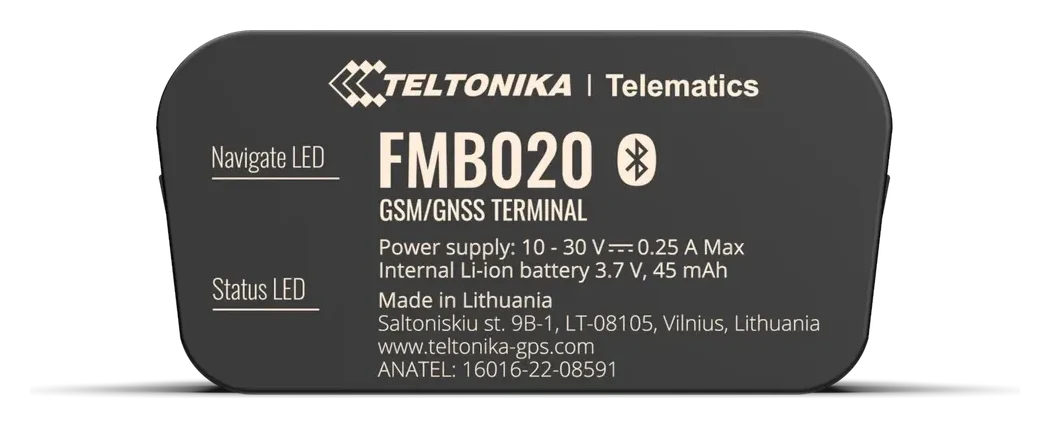
| FMB020 | The car’s diagnostic port, also called the OBD port | Receives power from the car with the ignition off |
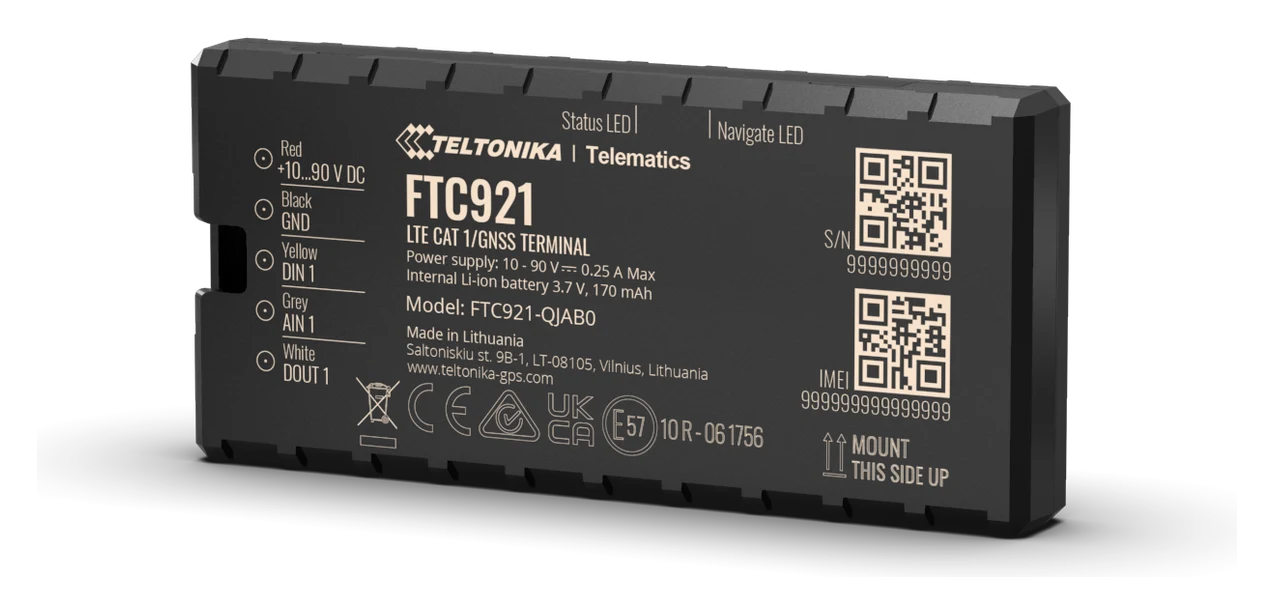
| FTC921 | Permanent connection to the car’s electrical system | Uses the car battery while parked too |
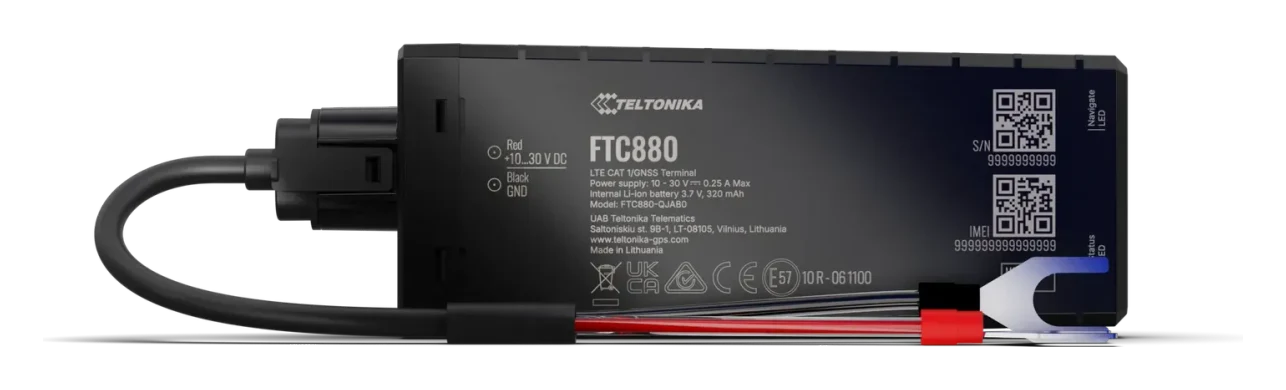
| FTC880 | Direct connection to the vehicle battery | Long periods without use need particular attention on a motorcycle or ATV with a small battery |
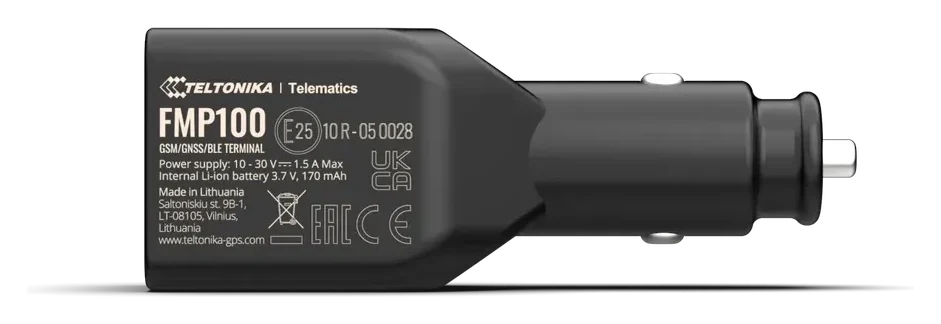
| FMP100 | Cigarette lighter socket | Operation depends on whether the socket stays powered after the ignition is switched off |
| ATC700 | Its own rechargeable battery | Does not use the car battery when operating independently, but needs recharging |
Using the OBD port does not mean the tracker only receives power during a journey. The port supplies power to the FMB020; the small battery inside the device does not make it suitable for extended use without vehicle power.
How much power does a tracker use?
The manufacturer’s FTC921 datasheet (v2.0, 2025-07-30) lists nominal current draw with no additional load at 12 V as less than 25 mA. The FTC880 datasheet (v1.1, 2026-06-18) gives the following figures at 12 V:
| FTC880 mode as listed by the manufacturer | Current draw |
|---|---|
| Normal mode (normal operation) | less than 22.729 mA |
| Online Deep Sleep (deep sleep with a network connection) | less than 5.314 mA |
| Deep Sleep (deep sleep mode) | less than 2.510 mA |
| Power off Sleep (sleep mode with power switched off) | less than 0.601 mA |
A simple calculation using the FTC921 nominal figure: 25 mA × 24 h = 600 mAh ≈ 0.6 Ah per day. This is a calculated upper bound for the manufacturer’s stated nominal conditions, rather than for all operating conditions or peak loads. Actual consumption depends on the mode and settings. The FTC880 draws considerably less current in sleep modes than in normal mode.
These are manufacturer figures, rather than our own measurements. The FMB020 and FMP100 datasheets do not list current consumption figures.
Long periods of parking and occasional journeys
A car used every day and a motorcycle left in a garage for several weeks need different settings. During long periods without use, the tracker’s additional power draw matters, especially if the vehicle battery is already worn or partly discharged.
For example, you might have a second car that you only drive occasionally, or a motorcycle you use at weekends. Tell us about your usual use and longer breaks when ordering. That lets us account for parking as well as journey recording when choosing the settings.
A motorcycle or ATV usually has a smaller battery than a car. When choosing the FTC880, it is therefore worth discussing storage outside the riding season too. Less frequent reporting helps save energy, but you still need to monitor the vehicle battery’s charge during long-term storage and recharge it when necessary. How long the battery lasts depends on the vehicle, battery condition and tracker settings. Read more in GPS trackers for motorcycles and ATVs.
Does less frequent reporting help save the battery?
Yes. With our standard settings, vehicle-powered models send data once an hour while parked. They record and send data more frequently while moving. If you rarely use the vehicle, we can choose power-saving settings and extend the reporting interval while parked, for example to once a day.
There is a trade-off between energy use and update frequency. With less frequent reporting, new information appears on the map less often. Event notifications can also be delayed, because the system first needs to receive data from the tracker.
The map shows the last location received and its timestamp; see the “Using the app” for details.
For the FMP100, check the cigarette lighter socket
If the cigarette lighter socket powering the FMP100 stays live with the ignition off, the tracker uses the car battery while parked. For what happens when socket power is lost and how temporary backup power works, see the FMP100 connection guide.
A backup battery is different from a battery-powered tracker
The small battery built into a vehicle-powered tracker provides temporary backup power. It is not intended to let you leave the device disconnected from vehicle power for long periods. Having a backup battery does not eliminate the tracker’s energy use while it is powered by the car either.
The ATC700 runs on its own battery and does not draw energy from the car battery when used independently. Choosing it means taking responsibility for charging the tracker. How often it needs charging depends on factors including location recording and reporting frequency, mobile network conditions and temperature.
For advice on choosing a battery-powered tracker for different items, see GPS trackers for trailers, boats and tools; for charging and battery life, see the ATC700 user guide.
What to do before leaving a vehicle parked for a long time
- Check which tracker you have and where it gets its power. For the FMP100, also check how the cigarette lighter socket behaves.
- Consider the condition and charge level of the vehicle battery. During long-term storage, monitor its charge and recharge it when necessary.
- Contact us if the vehicle will be parked for longer than usual. We can discuss power saving and the reporting interval while parked.
- If you use a tracker with its own battery, account for its charging needs too and check the timestamp of the latest data in the system.
Write to us through the contact page or at klienditugi@mugavauto.ee. Include the tracker model, vehicle type and how long the vehicle usually stays parked. This will help us recommend a suitable power source and settings.