Choosing a tracker
Motorcycle and ATV GPS tracker: fitting and battery
Choose a GPS tracker for your motorcycle or ATV. Learn about fitting the FTC880, managing a small vehicle battery and preparing for winter storage.
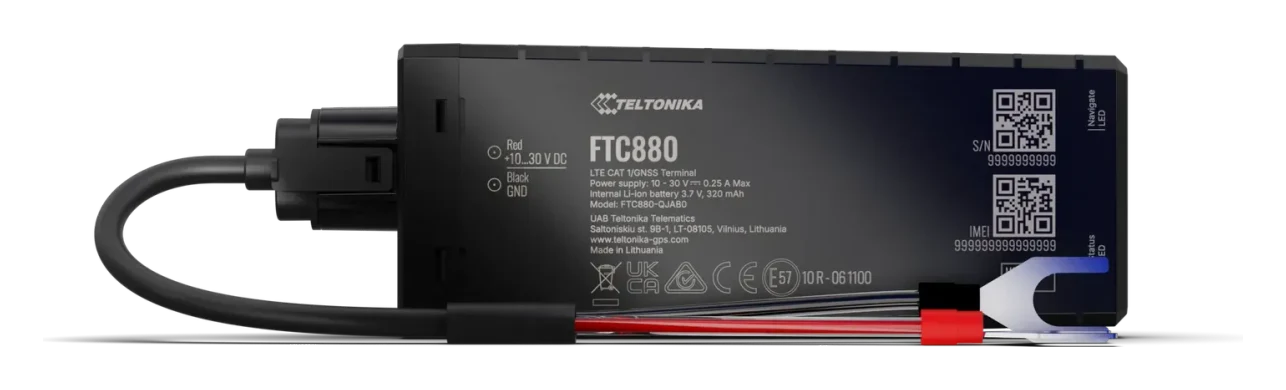
When choosing a GPS tracker for a motorcycle or ATV, start with two questions: where can you fit the device, and how long does the vehicle usually stand between rides? For vehicles exposed to water and mud, we offer the Teltonika FTC880. It connects directly to the battery with two wires and needs no separate ignition wire.
A motorcycle battery is usually smaller than a car battery. Tracker settings therefore matter just as much as protection for the casing: daily riding, weekend trips and several months of winter storage call for different settings and battery care.
Why water and dust protection matter
A motorcycle or ATV may not have a fitting location as dry as a car interior. The FTC880 casing is rated IP69K, providing protection against dust, high-pressure water and hot wash water. This is one reason we recommend this model for motorcycles, ATVs and other vehicles where water and mud are a consideration.
The protection rating applies to the casing. Wires and electrical connections need separate protection against moisture and damage. The casing must be properly closed and securely fastened. An IP69K marking alone is not enough to make the whole installation suitable.
Choose a location that suits the vehicle’s construction. Consider access to the battery and wiring as well as satellite signal reception. Metal covering the device can weaken reception, even when the tracker itself is protected from water.
How the FTC880 is fitted
The FTC880 connects to the vehicle battery with two wires; the connection sequence, wiring diagram and checks are in the FTC880 installation guide. If you are choosing between fitting it yourself and using a workshop, read “GPS tracker installation: DIY or workshop”.
A small battery and infrequent rides
The FTC880 draws power from the vehicle battery even with the ignition switched off. In normal use, you do not need to remove the tracker for charging, but it continues to consume energy while parked.
For motorcycles, we recommend sending data once a day while stationary. Agree on a suitable setting with us when ordering: tell us whether you ride every day or leave the vehicle standing for weeks between rides.
| How you use the vehicle | What to discuss before configuration |
|---|---|
| Frequent motorcycle rides | How fresh you need location data to be between rides |
| An ATV or motorcycle standing for long periods | Less frequent data transmission and the vehicle battery’s condition |
| Winter storage | Power throughout storage and monitoring the battery’s charge |
How transmission frequency affects location data on the map
While moving, the tracker sends data roughly once a minute with our standard settings. The actual frequency depends on configuration and mobile connectivity.
The map shows the latest data received; the “Using the app” explains how to check its timestamp. Less frequent transmission can also delay event alerts: the system needs to receive the relevant data first.
For example, if you ride your motorcycle at weekends, consider how quickly you want to hear about changes while it is parked before choosing a setting. Saving battery power and receiving fresh data are linked.
The FTC880 uses 4G with 2G support. For an explanation of storing and sending data when mobile coverage is lost, read “How a GPS tracker works”. Before travelling abroad, check the SIM card coverage.
Preparing for winter storage
Before putting the vehicle into storage for a longer period, review these questions.
- How long will the vehicle stand? Tell us the planned storage period and discuss a suitable transmission interval.
- What condition is the vehicle battery in? Monitor its charge during storage and recharge it when needed, following the vehicle’s instructions.
- Will the tracker retain its main power supply? Disconnecting the vehicle battery for storage cuts the main power supply; data transmission stops once the brief backup power runs out.
- Observe the temperature limits. The manufacturer’s FTC880 Datasheet v1.1, dated 18 June 2026 specifies an operating temperature of −40…+85 °C without the internal battery and 0…+40 °C with the internal battery; the battery charging temperature is 0…+45 °C. Connecting external power does not give a device with an internal battery the temperature range specified for one without it.
The FTC880’s built-in 320 mAh backup battery is intended for brief interruptions to the main power supply. It does not replace power from the motorcycle battery in winter. Tracking throughout the winter requires attention to the vehicle battery’s charge and continued main power, even with less frequent transmission. For longer periods without use, also read “GPS trackers and your car battery”.
What to tell us before buying or fitting a tracker
Describe your vehicle model, how often you use it, the longest periods it stands and your winter storage arrangements. Add whether you will fit the tracker yourself or would like to visit our workshop, and how often you want new data while parked. We can then discuss the fitting location, power supply and settings together.
Write through our contact page or email klienditugi@mugavauto.ee. After fitting, check for fresh data in the system and take a short test ride. Follow the “Using the app” to check that you can see your vehicle’s data before normal use.